
The short answer: acne is a follicle blocked by dead cells and sebum, then colonised and inflamed. Treating it means unblocking the follicle with salicylic acid, not stripping the face. Over-washing, scrubbing and drying alcohol all increase oil production and prolong the problem. Expect eight to twelve weeks for a routine to show its full effect, and longer for the marks left behind.
What's actually happening
Breakouts start when excess sebum, dead cells and bacteria block a follicle and inflammation follows. Heat and humidity raise sebum output, which is why acne behaves differently here than in temperate climates. The harsh washes people reach for damage the barrier, which triggers more oil and more inflammation: the cycle that keeps skin stuck.
The honest part
In Indian skin, the breakout is often the short part. The mark it leaves behind lasts months longer, and unprotected sun makes it permanent. Treating acne without treating the pigmentation that follows is half a job.
Four moves, in this order.
Salicylic acid, not scrubbing
BHA is oil-soluble, so it works inside the pore. Physical scrubs damage the surface and reach nothing.
Low and daily beats high and occasional
A gentle daily exfoliating cleanser outperforms a strong weekly peel, with a fraction of the irritation.
Moisturise anyway
Oily skin still gets barrier damage. A light non-comedogenic moisturiser reduces oil production, it doesn't add to it.
Protect the marks
Non-comedogenic SPF 50+ every day, or post-acne pigmentation sets in for the long term.
Formulated for this.
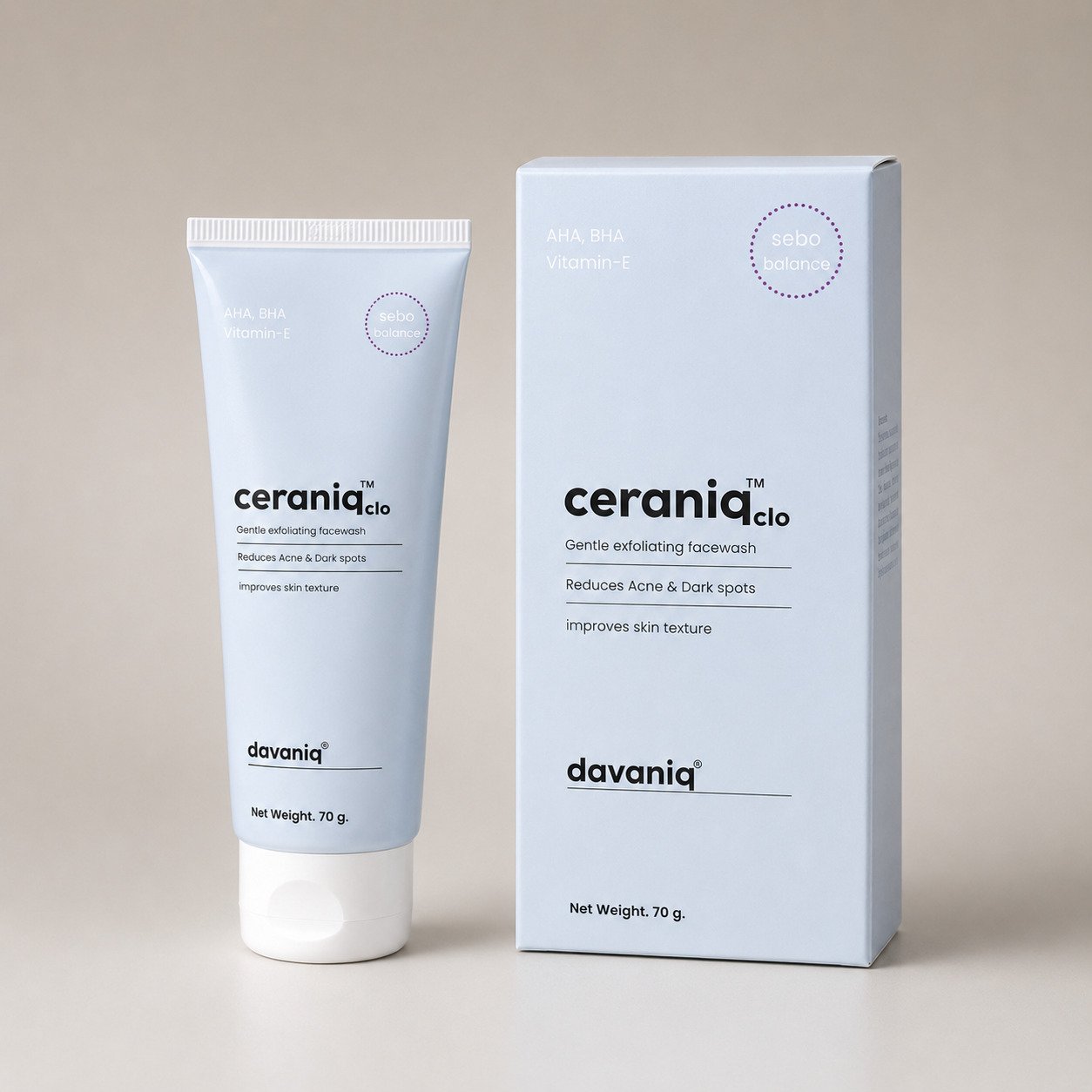
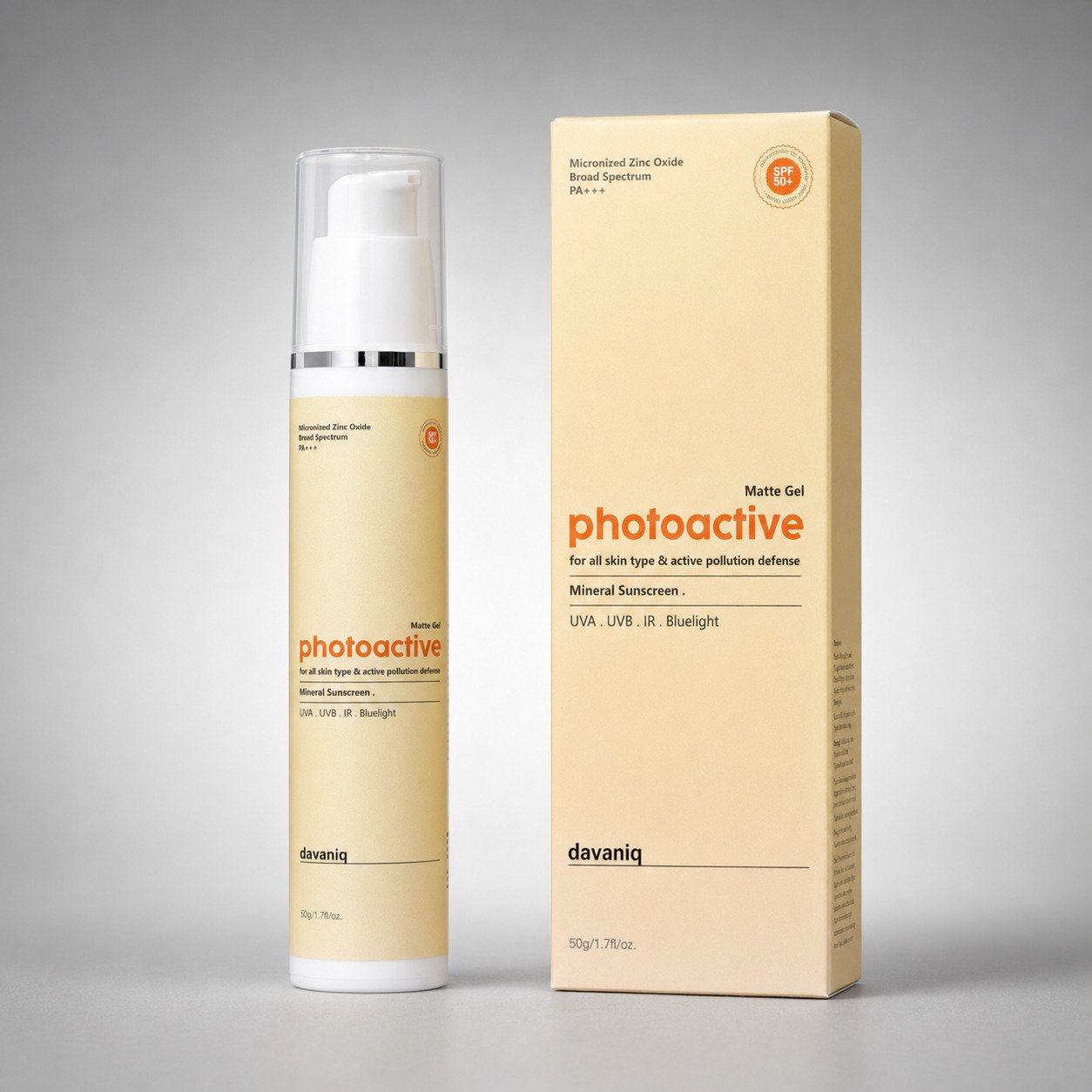
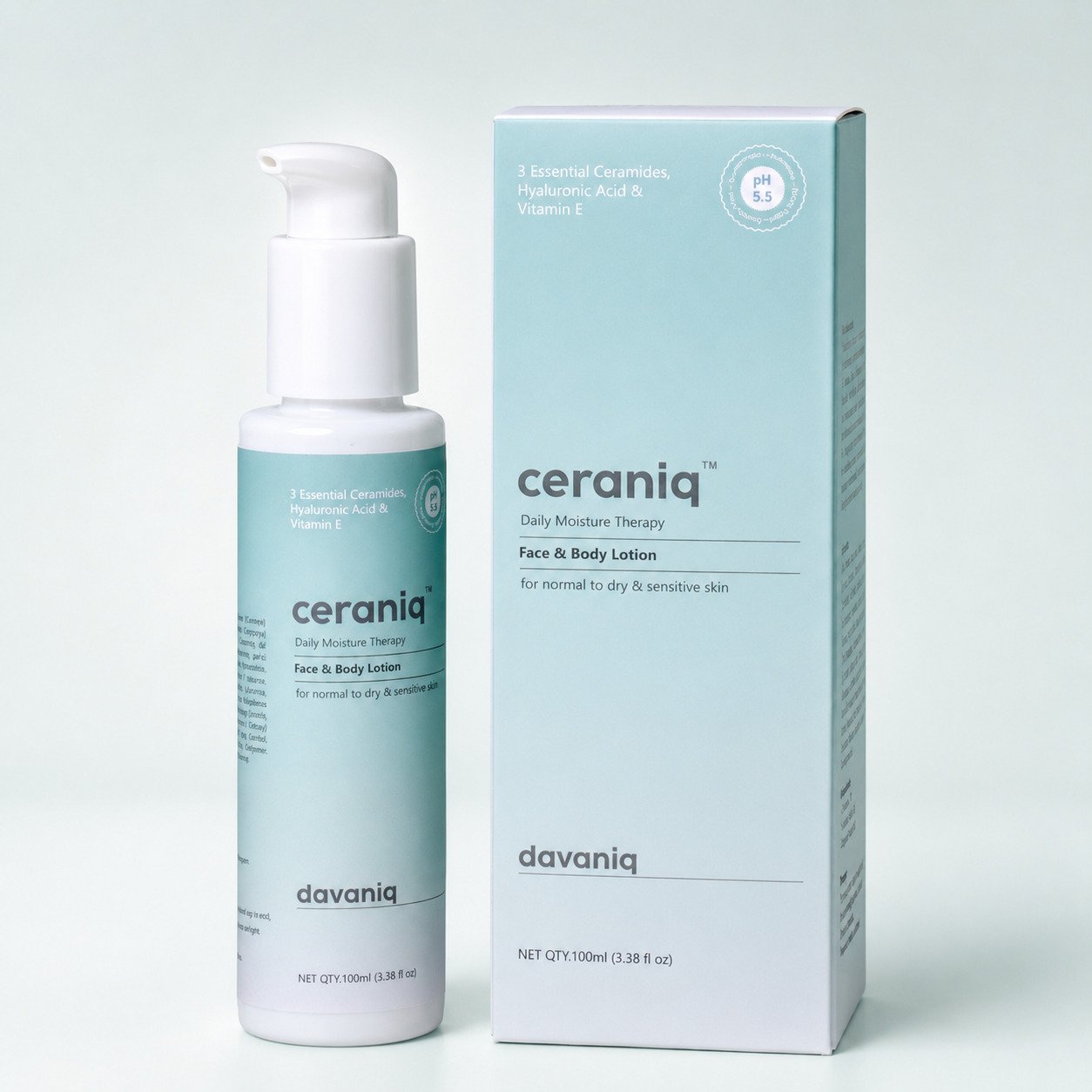
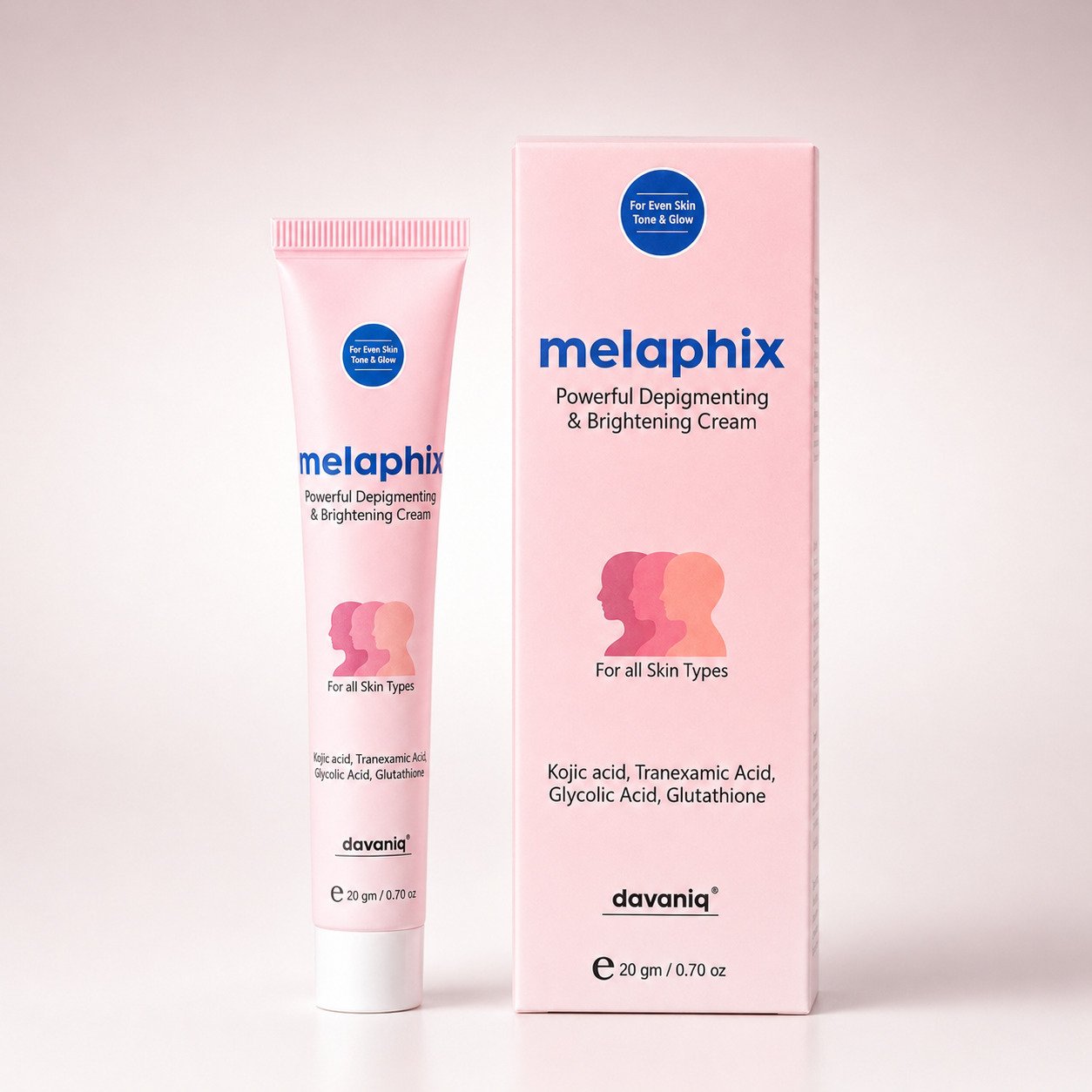
DavaniQ products are cosmetic formulations intended to support skin health and appearance. They are not medicines and are not intended to diagnose, treat or cure any condition. If a concern is persistent, painful or changing, please see a qualified dermatologist.
The ones people actually search.
What causes acne on the face?
Four things happening together: excess sebum, dead cells that fail to shed, C. acnes bacteria multiplying inside the blocked follicle, and the inflammation your immune system produces in response. Hormones drive the first. Heat and humidity make the second worse. Diet and stress modulate it, but they are rarely the whole cause.
How do you get rid of acne marks?
The dark marks left after a spot clears are post-inflammatory hyperpigmentation, not scars, and they fade in six to eight weeks with sun protection and a pigment-clearing routine. True scars are textural, meaning indented or raised, and creams cannot correct those. The single biggest mistake is skipping sunscreen, which sets those marks darker.
Is salicylic acid or benzoyl peroxide better for acne?
They solve different halves of the problem. Salicylic acid is oil-soluble, so it gets inside the follicle and clears the blockage, which suits blackheads, whiteheads and congestion. Benzoyl peroxide targets the bacterial and inflammatory side, which suits red, painful spots. Salicylic acid in a cleanser at one to two percent is the gentler place to start.
Does moisturiser cause acne?
The wrong one can. A heavy, occlusive cream on oily skin can block follicles, but skipping moisturiser entirely is worse: dehydrated skin compensates by producing more oil. A light, non-comedogenic gel or lotion is the answer, not nothing.
DavaniQ products are cosmetic formulations intended to support skin health and appearance. They are not medicines and are not intended to diagnose, treat or cure any condition. If a concern is persistent, painful or changing, please see a qualified dermatologist.
Worth reading first.
Build the routine around it.
Two minutes and six questions. We'll sequence the four steps for your skin type, this concern, and the climate you actually live in.