Science · 6 min read · May 2026
Ingredients are listed in descending order of concentration, down to 1%. Below 1%, they can appear in any order the brand likes. That single rule gives you most of what you need: if the hero ingredient on the front of the box appears after the fragrance and the preservatives, it is present in a quantity that will do very little.
This is called label dressing — including a trace of a well-known active so it can be named on the packaging. It is legal, extremely common, and the main reason two products with apparently identical ingredient lists perform completely differently.
You can estimate it. Preservatives such as phenoxyethanol are legally capped at around 1%. Fragrance, and thickeners like xanthan gum, are almost always used below 1%. Once you spot one of those, assume everything after it is present in trace amounts.
So: a serum listing niacinamide third, before the preservative, is a niacinamide serum. One listing it after phenoxyethanol, xanthan gum and fragrance is a serum with a niacinamide claim on the box.
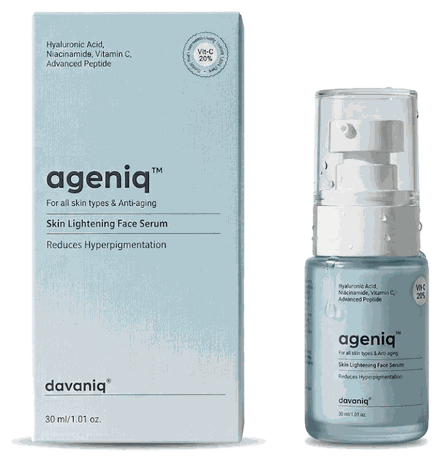
A stated percentage is more useful than none — but only against a known effective range. Niacinamide has good evidence at 2–5%; 10% adds little and irritates more. Alpha arbutin is supported at 2%. Salicylic acid works at 0.5–2%. A product advertising 20% niacinamide is not four times better than one at 5%. It's a marketing number.
And percentage without form tells you little. 20% of a stable vitamin C derivative and 20% of pure L-ascorbic acid behave completely differently — in potency, in tolerance, and in how long they survive an Indian summer in your bathroom.
Any brand that stands behind its formulations should be able to tell you what's in a product, at what percentage, and why that percentage. If the answer is vague, that's an answer. Our full ingredient rationale sits in the open on this site, product by product, because a claim you can't check is just an advertisement.
DavaniQ products are cosmetic formulations intended to support skin health and appearance. They are not medicines and are not intended to diagnose, treat or cure any condition. If a concern is persistent, painful or changing, please see a qualified dermatologist.
No countdown timers, no restock panic. Four considered letters a year on formulation, ingredients and what the evidence actually supports — plus first word on anything new.