
The short answer: a tan is UV damage that has already happened, and it fades on its own in two to four weeks as pigmented cells turn over. Scrubs and lemon do not remove it faster, they just inflame skin into producing more. The only reliable de-tan is prevention: two finger-lengths of SPF 50+ PA+++ every morning, reapplied at midday.
What's actually happening
UVB burns the surface. UVA, the part most people ignore, passes through cloud and window glass, reaches the deeper dermis, and drives tanning, pigmentation and the collagen breakdown that shows up as ageing twenty years later. It is present from morning to evening, all twelve months, indoors near a window and inside a car.
The honest part
Most people apply about a quarter of the sunscreen their SPF rating was tested with, once, at nine in the morning. That's not SPF 50 protection. It's closer to SPF 12 by lunchtime. Quantity and reapplication matter more than the number on the tube.
Four moves, in this order.
Read PA, not just SPF
SPF only measures UVB. PA+++ is what governs tanning, pigmentation and photoageing: the things you actually notice.
Two finger-lengths, every morning
Face and neck. Measured, not estimated. This is the single highest-return habit in all of skincare.
Reapply every three hours outdoors
Filters degrade in sunlight. Press a fresh layer over makeup rather than rubbing it in.
Match the finish to your skin
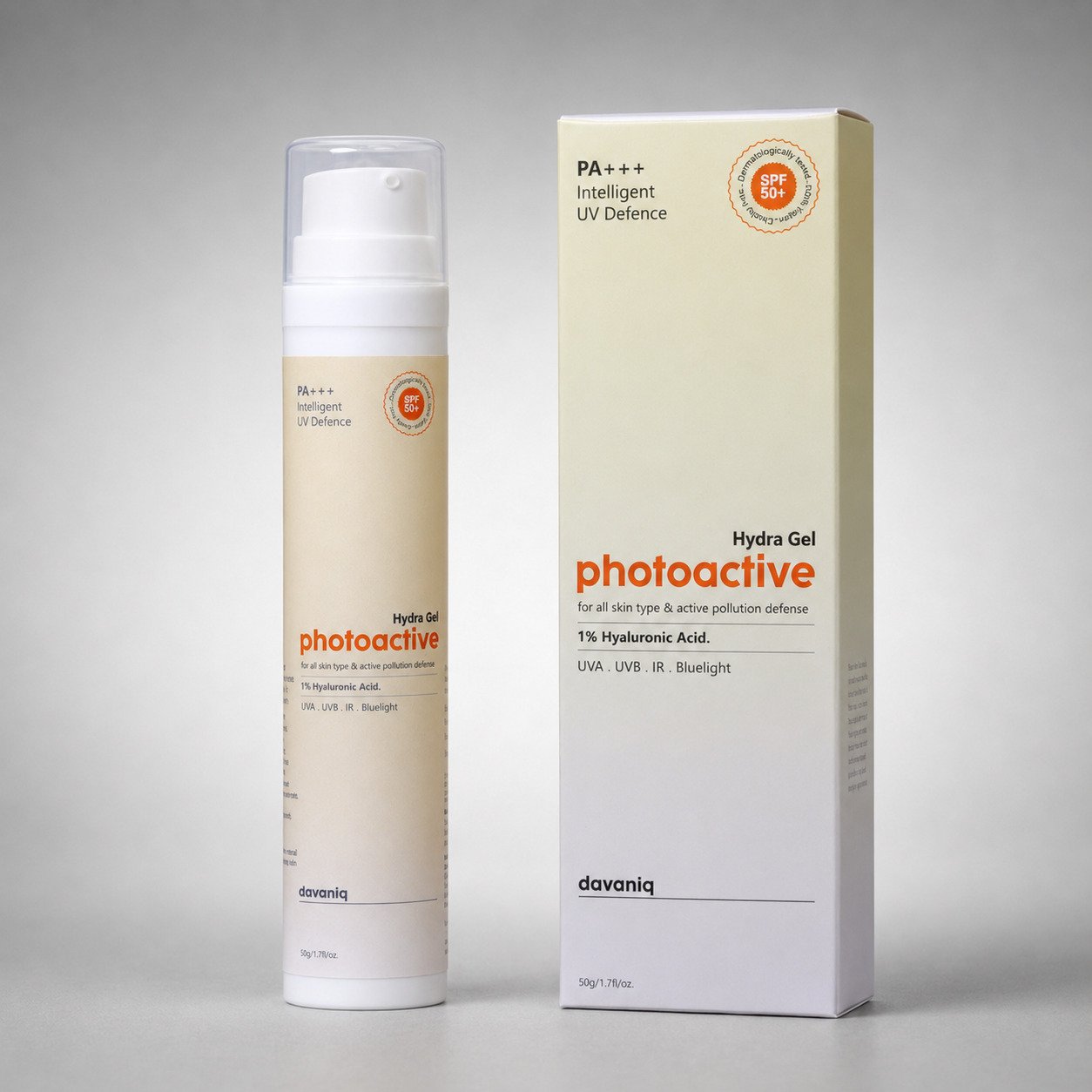
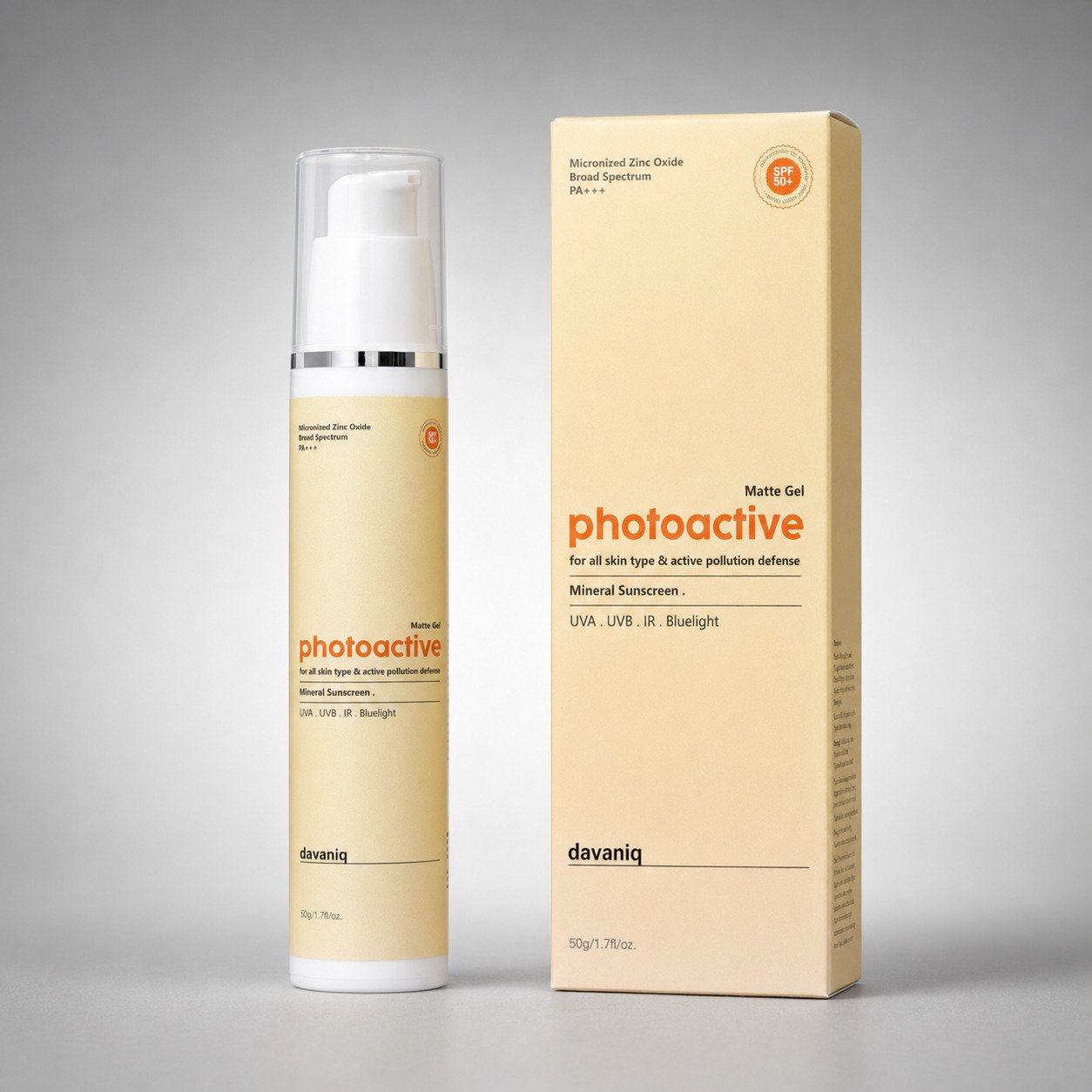
The best sunscreen is the one you'll wear daily. Matte for oily skin, hydrating gel for dry: the difference is compliance, and compliance is everything.
Formulated for this.
DavaniQ products are cosmetic formulations intended to support skin health and appearance. They are not medicines and are not intended to diagnose, treat or cure any condition. If a concern is persistent, painful or changing, please see a qualified dermatologist.
The ones people actually search.
How do you remove tan from the face?
By letting pigmented cells turn over and preventing new ones. That means daily sun protection, a gentle exfoliating acid such as low-dose glycolic two or three nights a week, and a tyrosinase inhibitor like kojic acid or alpha arbutin if the tan has settled into a spot. Expect two to four weeks. Scrubbing, bleaching and lemon juice all cause inflammation, which produces more pigment rather than less.
Does sunscreen prevent tanning?
It reduces tanning substantially but does not eliminate it, because tanning is driven mainly by UVA and most people apply about a quarter of the amount their sunscreen was tested with. Look at the PA rating rather than the SPF number: PA+++ or PA++++ is what governs tanning and pigmentation. SPF only measures protection against the burning wavelength.
Do you need sunscreen indoors in India?
If you sit near a window or drive during the day, yes. UVA passes through cloud and ordinary window glass, and it is the wavelength responsible for tanning, pigmentation and photoageing. Away from windows the requirement drops sharply, and screen light is not a meaningful source of UV.
How much sunscreen is enough for the face?
Roughly two finger-lengths for face and neck together, measured rather than estimated. Applied that way, once in the morning and once around midday if you are outdoors, an SPF 50 behaves like an SPF 50. Applied the way most people actually apply it, it behaves closer to an SPF 12 by lunchtime.
DavaniQ products are cosmetic formulations intended to support skin health and appearance. They are not medicines and are not intended to diagnose, treat or cure any condition. If a concern is persistent, painful or changing, please see a qualified dermatologist.
Worth reading first.
Build the routine around it.
Two minutes and six questions. We'll sequence the four steps for your skin type, this concern, and the climate you actually live in.