
The short answer: pigmentation on the face is melanin produced in response to sun, heat, friction or inflammation. It fades, but on skin's own schedule: roughly six to eight weeks for post-acne marks, three months or more for melasma. Nothing shortens that timeline. Daily SPF 50+ with PA+++ is what stops new pigment forming while the old pigment clears.
What's actually happening
Pigmentation is your skin protecting itself. Melanocytes respond to UV, heat, friction and inflammation by producing melanin, and in skin with more melanocyte activity to begin with, which is most Indian skin, that response is quicker, stronger and slower to fade. Which is why the same afternoon of sun that leaves one person pink leaves another with a mark that lasts four months.
The honest part
There is no cream that fades pigment faster than skin renews. The realistic timeline is six to eight weeks for post-acne marks and three months or more for melasma, and every one of those weeks depends on daily sun protection. Brightening without SPF is emptying a bath with the tap running.
Four moves, in this order.
Interrupt the production
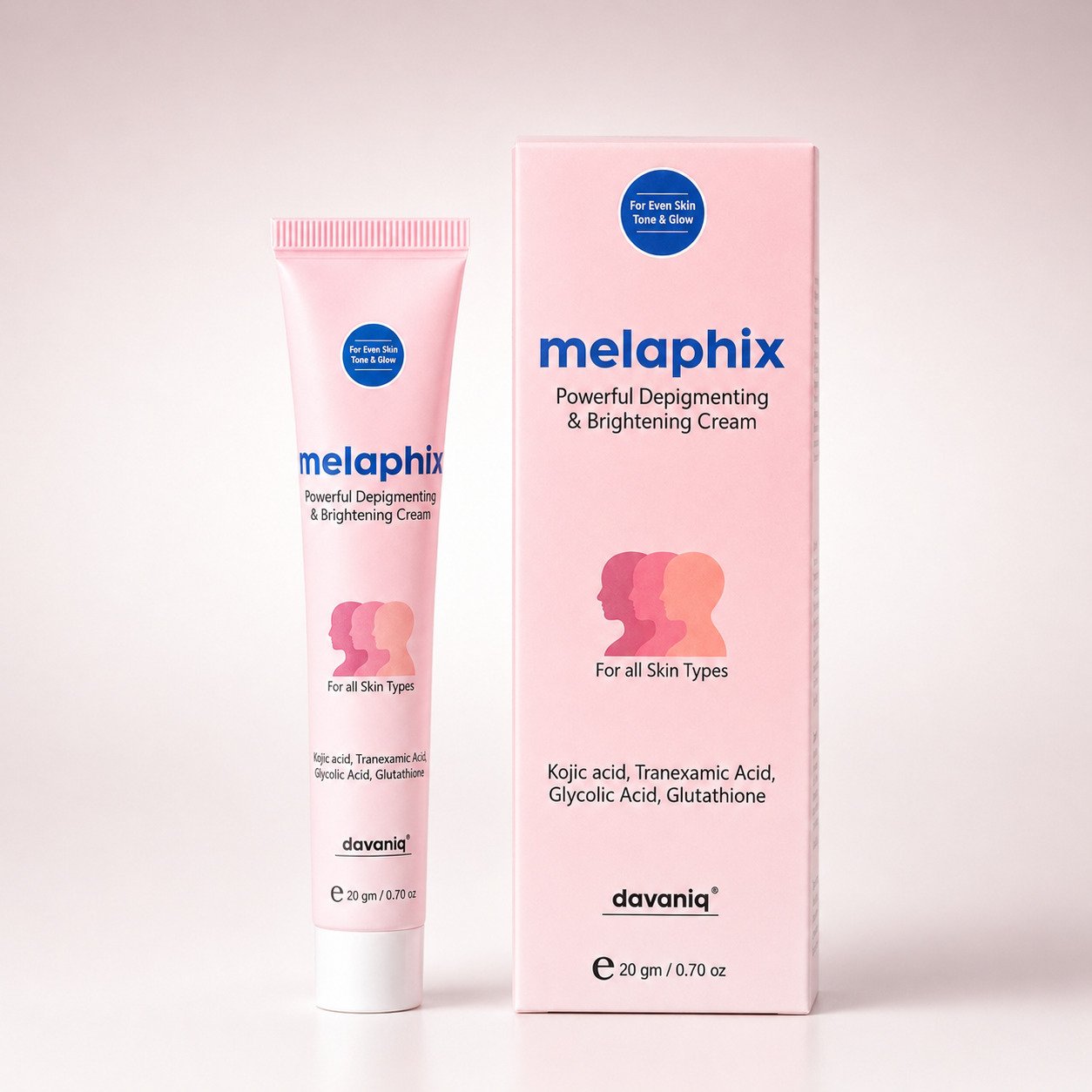
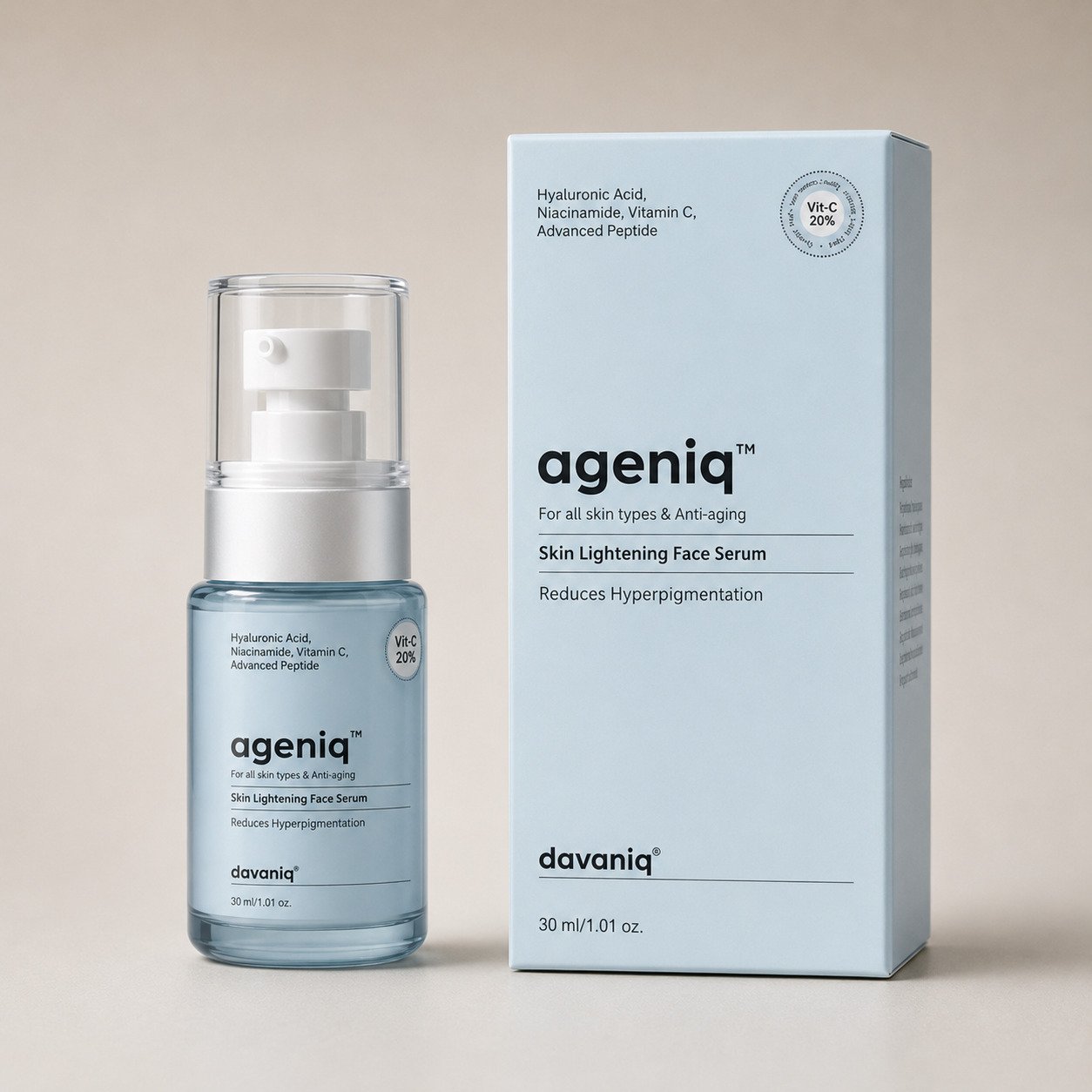
Kojic acid, alpha arbutin and vitamin C each slow the enzyme that starts pigment formation. Attacking one step alone is why single-active products stall.
Calm the inflammation
Tranexamic acid addresses the inflammatory and vascular side of melasma: the reason it returns even after spots lighten.
Clear what's already there
Low-dose glycolic acid speeds the turnover of pigmented surface cells so fading keeps pace with fresh production.
Then hold the line
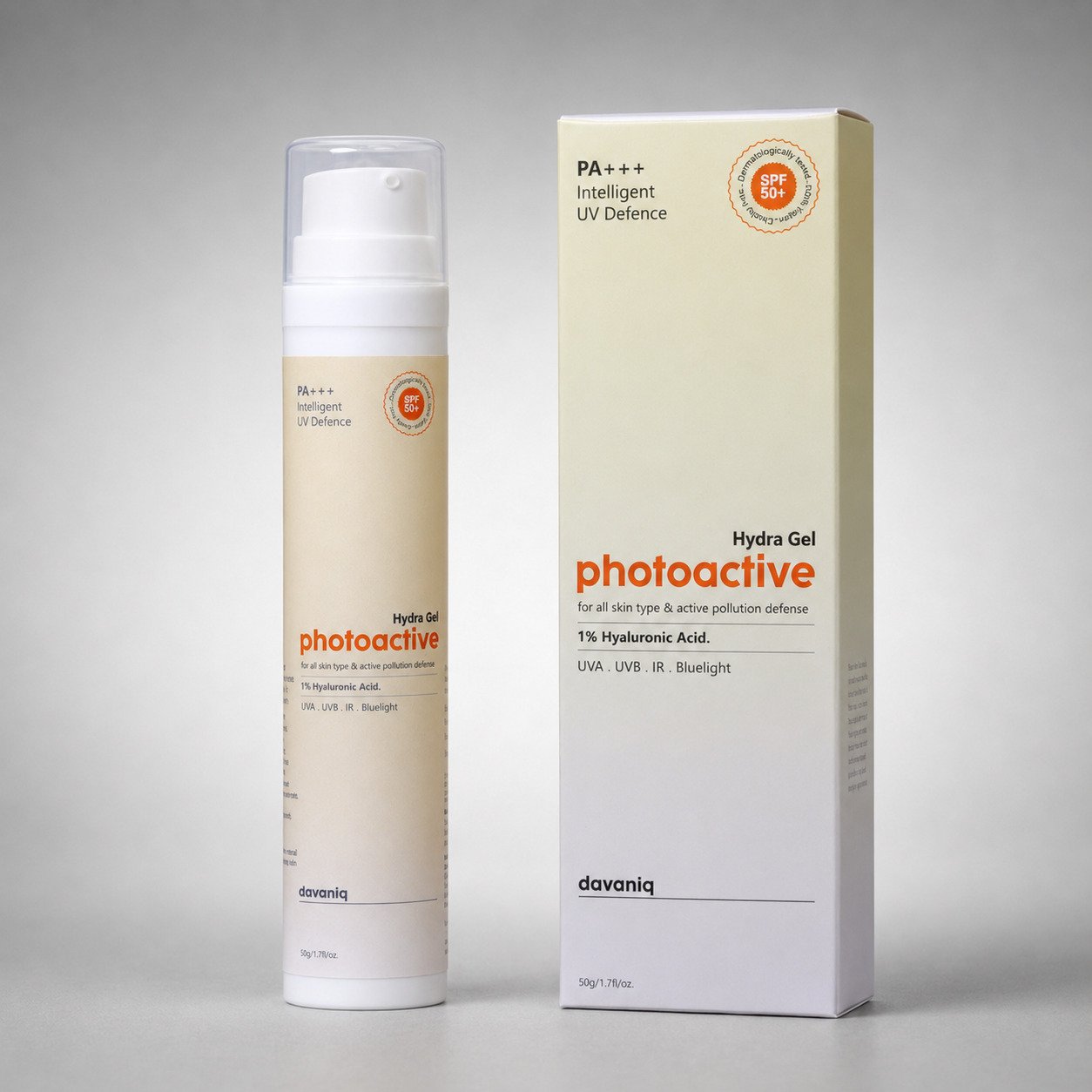
SPF 50+ with PA+++, applied properly and reapplied. This is not the optional step. It is the whole strategy.
Formulated for this.
DavaniQ products are cosmetic formulations intended to support skin health and appearance. They are not medicines and are not intended to diagnose, treat or cure any condition. If a concern is persistent, painful or changing, please see a qualified dermatologist.
The ones people actually search.
What causes pigmentation on the face?
Four triggers, usually in combination: ultraviolet light, heat, friction, and inflammation from acne or irritation. Each one signals melanocytes to produce melanin. Indian skin has more active melanocytes to begin with, so the same trigger produces a darker, longer-lasting mark than it would on lighter skin. Hormonal change, particularly in pregnancy or on the contraceptive pill, is the common driver behind melasma specifically.
How long does it take to reduce pigmentation on the face?
Post-acne marks generally fade over six to eight weeks. Sun-driven dark spots take eight to twelve. Melasma is measured in months rather than weeks and tends to return without continuous sun protection. Any product promising results in seven days is describing a surface effect, not pigment clearance.
Which vitamin deficiency causes pigmentation on the face?
Vitamin B12 deficiency is the one with a genuine link to skin darkening, and it is worth a blood test if pigmentation appeared quickly without sun exposure. Low vitamin D and iron are associated with dull, uneven skin but are not direct causes of pigmentation. For most people the cause is ultraviolet exposure, not diet.
Can pigmentation be removed permanently?
Existing pigment can be cleared. The tendency to produce it cannot, because it is written into how your skin responds to light and heat. That is why pigmentation returns within weeks when sunscreen stops, even after a course of treatment worked. Think of the result as maintained rather than cured.
DavaniQ products are cosmetic formulations intended to support skin health and appearance. They are not medicines and are not intended to diagnose, treat or cure any condition. If a concern is persistent, painful or changing, please see a qualified dermatologist.
Build the routine around it.
Two minutes and six questions. We'll sequence the four steps for your skin type, this concern, and the climate you actually live in.