Concerns · 8 min read · July 2026
Search for pigmentation advice in India and you'll find thousands of results promising removal in seven days. That promise is the reason so many people conclude nothing works. Pigment doesn't sit on your skin like a stain. It sits inside skin cells, distributed through layers that renew on a fixed biological schedule — and no cream accelerates that schedule beyond a certain point.
So the real question isn't which cream removes pigmentation. It's how quickly your skin can clear pigmented cells, how much new pigment is arriving while that happens, and what you're doing about the second part.
Skin with more melanin has melanocytes that respond faster and more emphatically to provocation — UV, heat, friction, and inflammation of any kind. That's genuinely protective: it's why darker skin burns less and photoages more slowly. The trade-off is that the same response produces marks that are darker, more persistent, and slower to resolve.
It also means anything that inflames your skin causes pigmentation. A spot you picked. A harsh scrub. A cream that stings. Waxing. An over-strong peel from a salon. In this skin type, irritation isn't a temporary discomfort on the way to results — it's a mechanism that produces the exact problem you're treating.
Post-inflammatory hyperpigmentation — the brown mark left after a spot heals. Superficial, and the most tractable. With consistent treatment and daily sun protection, six to eight weeks for meaningful fading. Left alone with no sun protection, six months to a year, sometimes permanent.
Sun-driven spots and uneven tone — accumulated UV damage. Three months of consistent work for a visible shift. Prevention here is dramatically cheaper than correction.
Melasma — symmetrical patches, usually across cheeks, forehead and upper lip, often hormonal. This is the hard one. Twelve weeks minimum, frequently longer, and it is managed rather than cured. It responds to heat as well as light, which is why it flares in Indian summers and after hot vehicles and kitchens. Anyone promising to clear melasma quickly is either mistaken or using something you should be cautious of.
Pigment formation is a chain: a trigger provokes the melanocyte, tyrosinase converts tyrosine into melanin, melanin is packaged and transferred up to surface cells, and those cells eventually shed. A product that works at one point in that chain gives you a modest, plateauing result — which is exactly what most single-active brightening creams deliver.
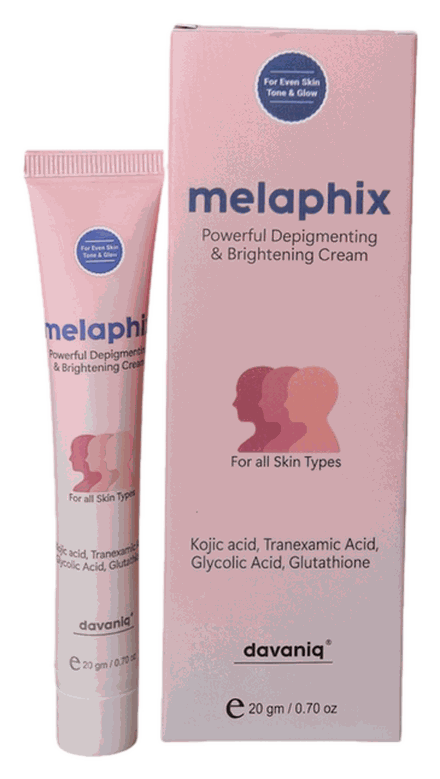
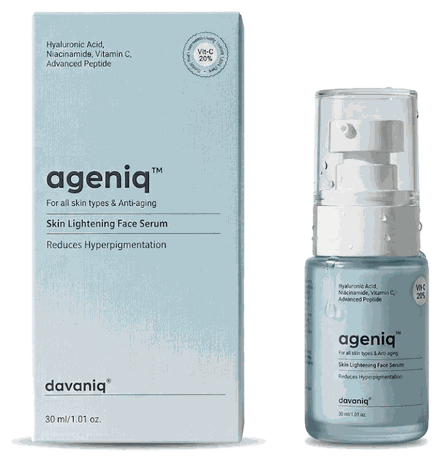
A better approach works at several points at once. Kojic acid and alpha arbutin slow the enzyme. Tranexamic acid addresses the inflammatory and vascular signalling underneath melasma. Vitamin C interrupts production and neutralises the oxidative triggers. A low dose of glycolic acid clears the pigmented cells already at the surface so the fading is visible rather than theoretical.
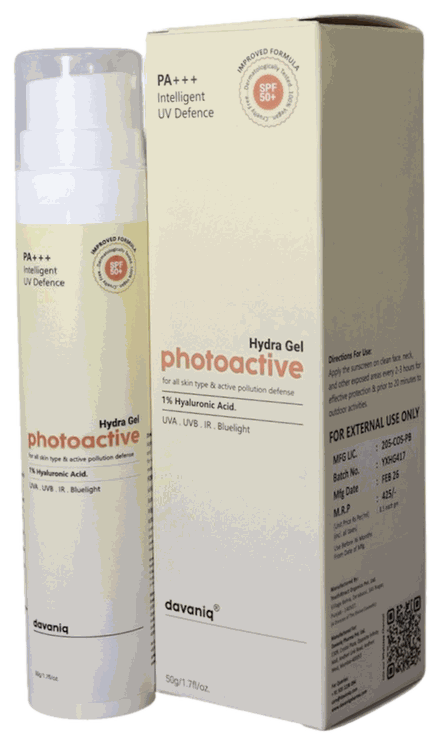
Every brightening active in existence is working against your daily UV exposure. In India, that exposure is high all twelve months, present through cloud, through car windows, and beside the window you sit next to at work. Without daily broad-spectrum sun protection, you are producing new pigment at roughly the rate your treatment clears the old — and concluding, reasonably, that the treatment failed.
If you take one thing from this: sunscreen is not the supporting step in pigmentation treatment. It is the treatment. The cream is what makes it faster.
DavaniQ products are cosmetic formulations intended to support skin health and appearance. They are not medicines and are not intended to diagnose, treat or cure any condition. If a concern is persistent, painful or changing, please see a qualified dermatologist.
No countdown timers, no restock panic. Four considered letters a year on formulation, ingredients and what the evidence actually supports — plus first word on anything new.